AI Detection Is Pushing Students Toward AI, New Reporting Shows
By Dusan Boljevic · AI/ML Engineer at TheChecker.AI

Quick answer
AI detection was built to catch AI use. New reporting shows it's doing something closer to the opposite: students say fear of a false flag is pushing them to use AI tools they otherwise wouldn't touch, just to check whether their own writing "sounds too AI" before they submit it. That's not a reason to abandon detection. It's a reason no single score should ever be the whole verdict.
A CUNY instructor watched it happen in his own classroom
Dadland Maye teaches English at the City University of New York. In a January 2026 essay for The Chronicle of Higher Education, he described a student who started using generative AI only after hearing a rumor that em dashes trigger AI detectors. She began running her own writing through AI tools first, just to see how it would register, before she ever turned it in.
Another student came to Maye after being accused of AI use in a different class. The accusation was unfounded and the paper went ungraded anyway. Her response wasn't to write more carefully. It was to get multiple AI subscriptions and study how detection works, so she'd know what to avoid next time. "I feel like I have to stay abreast of the technology that placed me in that situation," she told him, "so I can protect myself from it."
Maye eventually stopped requiring students to disclose AI use in his syllabus. He said the line between "using AI" and "using the internet" had blurred past the point where a disclosure policy meant anything useful. He shifted to teaching students how to use AI tools for research and outlining, while keeping drafting their own work — treating the technology as a subject to teach, not a violation to police.
This lines up with a mechanism we've written about before: detectors flag statistical patterns, not intent, and confident or unusual writing can look "too smooth" to a model trained mostly on typical prose. When students learn that lesson from a false accusation instead of a classroom explanation, they don't get more careful. They get more defensive.
The stress shows up in survey data, not just anecdotes
A YouGov survey commissioned by student-support company Studiosity, covering 2,373 UK students and reported by Times Higher Education and republished by Inside Higher Ed, put numbers on the same pattern. Sixty percent of students using AI tools said the experience caused them stress. Seventy-five percent of AI-using students reported significant stress specifically about being wrongly flagged for plagiarism by a detection tool. More than half of all students surveyed — not just AI users — named "being accused of cheating when I did nothing wrong" as a source of stress.
International students reported it worse than domestic ones: they were twice as likely to say they felt "a lot" of stress about detection tools. That tracks with published research on detector bias against non-native English writers, which we've covered in the context of appeals — a fluency pattern common among second-language writers can read as "too uniform" to some detectors, which is exactly the kind of false-positive risk that turns caution into evasive behavior.
The report's own recommendation to universities was blunt: reconsider detection tools that produce false positives, and build clear pathways for students to contest a wrongful accusation before it costs them a grade.
Institutions are tightening policy at the same time
None of this is happening in a vacuum of shrinking AI use. A Harvard Crimson survey of more than 460 Faculty of Arts and Sciences professors, published mid-September 2026 and covered by Inside Higher Ed, found nearly two-thirds of Harvard faculty now say AI has had a "somewhat" or "very" negative effect on their courses — up from 42 percent just a year earlier. Only 3.5 percent of professors reported having no AI policy at all, down from 10 percent the year before. About a quarter now prohibit AI use in class entirely, up from one in five.
So the pressure is coming from both directions at once. Faculty attitudes are hardening and policies are getting stricter, right as students report rising anxiety that a legitimate piece of writing will get caught in the crossfire. That combination is exactly the setup that produces defensive AI use: when the cost of a false accusation feels high and the rules feel unclear, some students will manage the risk with the same technology the rules are trying to catch.
What this actually says about detection, and what it doesn't
Nobody's arguing detection should get scrapped here. Perplexity and burstiness are real signals, and they genuinely catch a lot of AI-generated text. The point this reporting makes is narrower: a single detector score shouldn't function as an automatic verdict. We've made that case before. It matters more now, not less, as the stakes climb.
Think of a score as the start of a conversation, never the end of one. Treat it as proof by itself and two bad things happen together. Honest writers get pushed into defending themselves for no reason. And whoever actually is trying to hide AI-generated text gets a roadmap, because style alone can't catch everything, and now the whole internet is arguing publicly about exactly which phrasing supposedly sets off a flag.
Keeping detector mechanics secret isn't the fix. A better process around what a flag actually means is: something that opens a conversation with a real person, gets weighed against version history or drafts when those exist, rather than closing the case on its own.
FAQ
Does this mean AI detectors are causing more cheating, not less? Not what the reporting shows. Students turn to AI defensively here, checking their own honest writing out of fear, rather than learning to cheat because a detector exists somewhere. Different problem, different fix.
Why would a legitimate essay ever get flagged in the first place? Because detectors measure things like predictability and sentence-length variation, not authorship itself. Confident or highly polished prose can look statistically similar to AI output. So can patterns common among non-native English speakers, even when every word came from a real person.
What should a student do if they're accused after writing something themselves? Ask for evidence beyond the score. Bring what you have: drafts, version history, notes, an outline. Most legitimate detector vendors say plainly, in their own documentation, that a score alone was never meant to close a case.
Should schools stop using AI detectors altogether? No — the data argues for fixing false-positive-prone tools and building real appeal paths, not abandoning detection. Pair a detector with an actual review process and clear policy, and it behaves nothing like a detector used as an automatic verdict. The goal is a system students trust enough to stop gaming, not a system with no signal at all.
Check where a real detection score actually stands
A percentage on its own can't tell you the full story, and treating it like it can is exactly what's driving the defensive behavior in this reporting. Run your own text through TheChecker.AI to see the full breakdown behind the number, then read how we measure and report detector accuracy so a score always comes with the context it needs.
Dusan Boljevic
AI/ML Engineer at TheChecker.AI
Dusan Boljevic writes at TheChecker.AI, covering how AI-text detection works and how students, writers and teams can use it responsibly.
Related posts
Harvard's "Two-Way Suspicion": What AI Detection Is Doing to Classroom Trust
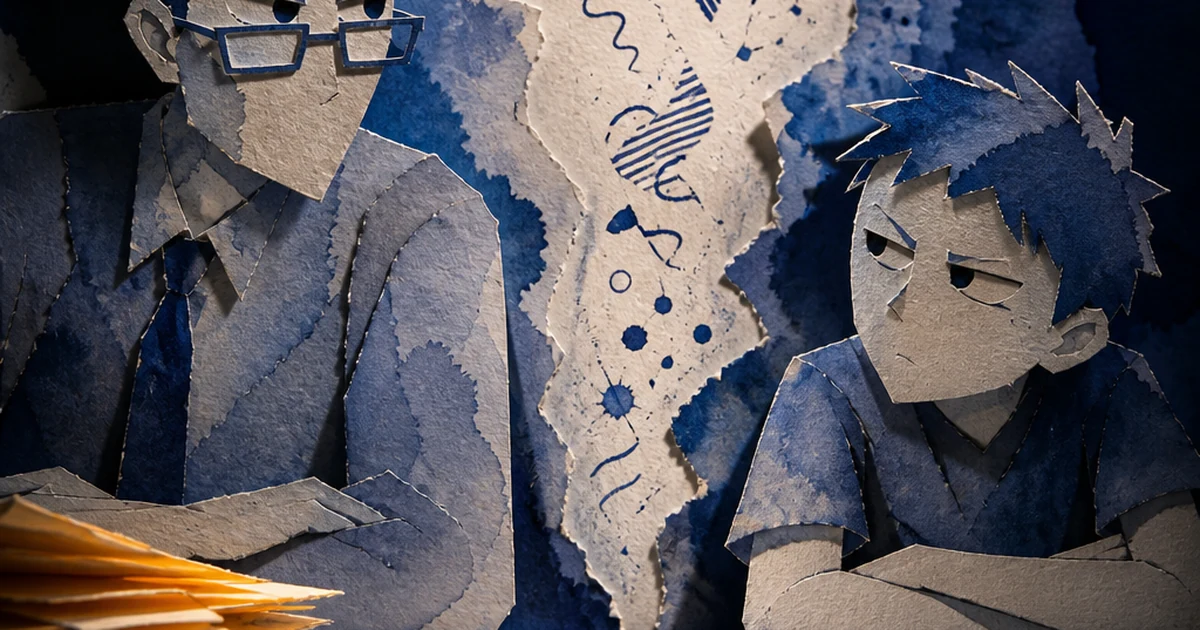
A new Harvard report names "two-way suspicion": teachers' AI-dar hunches and student fear, eroding trust without proof.
Read more
Dartmouth Just Authorized an AI Detector for Grading. Its Own Rules Show Why That's Harder Than It Sounds
Dartmouth authorized Pangram for grading with 7 rules: de-identify work first, no grade penalty on a score alone, FERPA-driven.
Read more
What Actually Decides an AI-Cheating Dispute? Five 2026 Cases Say the Same Thing
Five AI-cheating disputes reached real verdicts in 2026. None hinged on detector accuracy — all came down to whether the appeal process held up.
Read more