Harvard's "Two-Way Suspicion": What AI Detection Is Doing to Classroom Trust
By Dusan Boljevic · AI/ML Engineer at TheChecker.AI
Quick answer
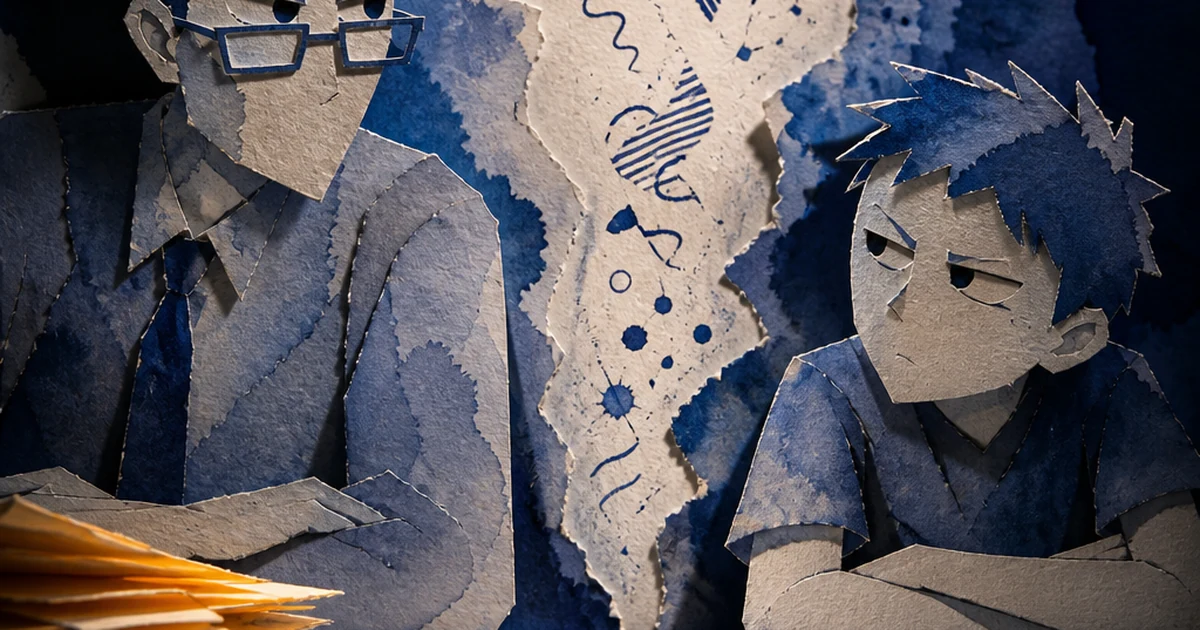
A new Harvard report gives a name to something AI detection has been quietly doing to classrooms: "two-way suspicion." Teachers develop a hunch they call "AI-dar" that a student used AI, can't prove it, and the student can't disprove it. Students, meanwhile, hide their AI use or deliberately write worse to avoid getting flagged. The result isn't less cheating. It's a broken student-teacher relationship on both sides, and the report's own fix has nothing to do with better detection software.
The report, in plain numbers
On October 6, 2026, Harvard's Graduate School of Education published findings from the Center for Digital Thriving (CDT), a research group based at Project Zero. The report, An AI Policy Isn't a Playbook, draws on a nationally representative survey of more than 1,000 U.S. public school teachers and principals, plus interviews with 12 educators and 31 students ages 15 to 19.
The headline numbers are blunt. A quarter of teachers and 29% of principals said AI use has created "dilemmas or difficult decisions" in their schools. Of those who reported a dilemma, 74% of teachers and 69% of principals described something cheating-related — meaning the AI conversation in most schools is still, overwhelmingly, about catching people, not teaching them. And only 18% of teachers and 24% of principals said their school has a specific policy governing generative AI at all. Most of the burden for deciding what counts as cheating falls on individual teachers, one classroom at a time.
Researchers Beck Tench, Emily Weinstein, and Carrie James, with Allison Starks and Sara Konrath, frame the moment as a "Ted Lasso problem": an experienced coach — the teacher — is suddenly refereeing a game whose rules keep changing, with no rulebook and no training for it.
Why "two-way suspicion" is the real finding here
The report's most useful idea isn't a statistic. It's a term: two-way suspicion, defined as what happens when two parties both suspect each other of using AI, eroding trust regardless of whether AI was actually used.
Here's the mechanism, straight from the interviews. Teachers develop "AI-dar" — the perceived ability to sense when AI was used on a piece of student work. They can't prove it from a hunch, and a student on the other end of that hunch can't disprove it either. One high school sophomore described the resulting dynamic bluntly: "It's kind of like a hellscape for both students and teachers."
That hunch changes behavior on both sides. Some students described deliberately underperforming — writing a worse draft than they're capable of — specifically to avoid looking "too polished" and getting flagged. One student put it this way: "It sucks because I never was going to cheat, but now it feels like I have to." That's not a student gaming a detector to cheat. That's a student sabotaging their own work because a system built to catch misuse has made honest excellence look suspicious.
The relationship cost shows up just as clearly. A high school junior told researchers, "I don't usually go to my teachers. I kind of just go to Chat." When a teacher's job depends on reading a student's questions, mistakes, and growth over time — and AI quietly absorbs the moments where that would normally happen — the signal a teacher relies on to actually teach disappears, not just the signal a detector relies on to catch cheating.
Beck Tench, one of the report's co-authors, put the stakes in a Good Morning America interview that ran alongside the report's release: "Teachers can't see their students anymore. They have a hard time understanding what their students know."
This is a different failure mode than the one we've already covered
We've written before about how fear of a false AI flag pushes some students to run their own honest writing through AI tools first, just to check whether it "sounds too AI" before they submit it. That's a defensive-use problem: students managing detection risk with the same technology the rules are trying to catch.
The CDT report describes something adjacent but distinct. It's not primarily about students gaming a detector. It's about what happens to the teacher-student relationship when detection-driven suspicion becomes the dominant mode of interaction — teachers turning into referees, students turning into people who no longer bring their real questions to a real adult. The report's own language captures the shift precisely: AI, researchers write, "is making student learning invisible to teachers," turning a teacher into someone students look past rather than someone they go to.
Both problems trace back to the same root cause we keep returning to on this blog: a single score or a single hunch, treated as a verdict instead of a starting point, pushes people toward defensive behavior instead of honest behavior. The CDT report is the clearest evidence yet that this dynamic doesn't stop at individual disputes — it reshapes the whole classroom relationship.
The report's fix isn't a better detector. It's a conversation.
This is the part worth sitting with. CDT's researchers didn't respond to "two-way suspicion" by recommending more accurate detection software, stricter policy enforcement, or a universal AI ban. Their recommendation is explicitly relational: teachers need tools to have better conversations with students about AI, not better instruments to catch them with.
The report packages this as five free classroom "plays" — structured conversation starters co-designed with educators and students, built around questions like: What pressures are pushing students to hide their AI use? Where do the gray areas actually sit, and who gets to decide? What would it look like to map a specific AI dilemma together instead of litigating it after the fact?
None of the five plays involve a detector. All five involve a teacher and a student actually talking. The report frames this as shifting teachers from "AI referee" — someone enforcing a call after the fact — to "AI coach" — someone helping a student navigate a choice before it becomes a disciplinary problem.
This lines up with a point we've made about detection scores generally: a score is the start of a conversation, never the end of one. The CDT report arrives at the same conclusion from the opposite direction — not from a statistics lab testing detector accuracy, but from 31 students and more than 1,000 educators describing what detection-as-enforcement actually does to a classroom. When a discipline built around trust gets run primarily through suspicion, the thing that breaks first isn't the cheating rate. It's the relationship that made teaching possible in the first place.
What this means if your school still leans on detection scores
Nothing here argues detection tools are useless or that schools should abandon them. The report's complaint isn't with the existence of AI-detection signals — it's with treating a hunch, or a score, as a closed case rather than one data point in an actual conversation. Schools that have scaled back blanket reliance on a single AI-detector score have generally done it for exactly this reason: a number alone was never built to carry the full weight of an accusation.
If you're a teacher reading a flagged assignment, or a student staring down one, the practical takeaway from this report is the same one we'd give anyway: a detection signal should open a dialogue, not close one. Ask what the score actually measures. Look at drafts, revision history, and the student's own account before treating a number as a verdict. That's not a workaround for weak detection — it's what responsible use of any detection signal looks like, Harvard report or not.
FAQ
What is "two-way suspicion," exactly? A term coined by Harvard's Center for Digital Thriving to describe a dynamic where teachers suspect students of using AI to cheat, and students simultaneously fear being falsely accused of it — both sides losing trust in the other regardless of whether AI was actually used.
What is "AI-dar"? The report's term for a teacher's perceived, unprovable ability to sense when AI was used on a student's work — a hunch, not a measurement, and one students have no clean way to disprove.
Does the report recommend schools stop using AI detectors? No. It doesn't focus on detection software accuracy at all. Its recommendation is that schools and teachers build structured conversations with students about AI use, rather than relying on suspicion or a score as the primary mechanism for handling AI-related questions.
How big was the study behind this? A nationally representative survey of more than 1,000 U.S. public school teachers and principals, plus interviews with 12 educators and 31 students ages 15 to 19, conducted by the Center for Digital Thriving at Harvard's Project Zero.
See what a detection score actually tells you
A score is one data point, not a verdict — that's the lesson this report reaches independently, and it's the same principle behind how we report results. Run a piece of writing through TheChecker.AI's free demo to see the sentence-level breakdown behind any number, before anyone treats it as a conclusion.
Dusan Boljevic
AI/ML Engineer at TheChecker.AI
Dusan Boljevic writes at TheChecker.AI, covering how AI-text detection works and how students, writers and teams can use it responsibly.
Related posts

AI Detection Is Pushing Students Toward AI, New Reporting Shows
Students say fear of a false AI flag is pushing them to use AI defensively, just to check their own writing first.
Read more
Dartmouth Just Authorized an AI Detector for Grading. Its Own Rules Show Why That's Harder Than It Sounds
Dartmouth authorized Pangram for grading with 7 rules: de-identify work first, no grade penalty on a score alone, FERPA-driven.
Read more
What Actually Decides an AI-Cheating Dispute? Five 2026 Cases Say the Same Thing
Five AI-cheating disputes reached real verdicts in 2026. None hinged on detector accuracy — all came down to whether the appeal process held up.
Read more